
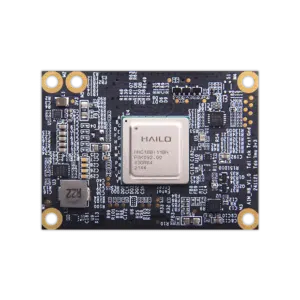
As artificial intelligence becomes a core component of industrial and IoT systems, the need for efficient and powerful edge processing has grown significantly. AI accelerator modules offer a practical hardware solution for deploying AI capabilities closer to the data source. These modules are designed to improve performance, reduce latency, and enable real-time inferencing, all while keeping power consumption low and integration simple.
Flexible Form Factors for Seamless Integration
AI accelerator modules are available in multiple form factors, including M.2 and board-to-board connector configurations. This design versatility ensures that the modules can be easily integrated into a wide range of platforms, from compact edge computers to full-scale industrial systems. Whether upgrading an existing PC or embedding AI capabilities into a new IoT device, these modules provide the flexibility to meet varying hardware requirements without major redesigns.
Enhancing Deep Learning Performance
At the heart of these modules is a dedicated AI processing unit that significantly enhances deep learning tasks. Designed to handle complex models such as object detection, natural language processing, and predictive analytics, these accelerators allow edge devices to process data locally without relying on cloud connectivity. This reduces bandwidth usage and minimizes the risk of data delays, which is critical in real-time environments such as industrial automation, smart surveillance, and healthcare.
Optimized for Real-Time AI Applications
Real-time decision-making is a key advantage of deploying AI at the edge. Accelerator modules are built to support low-latency inferencing, allowing devices to react instantly to input data. This capability is essential in scenarios like robotics, traffic monitoring, smart retail, and autonomous systems, where fast and accurate processing can directly impact safety, efficiency, and user experience.
Scalable Solution for Growing AI Needs
AI workloads are evolving, and the demand for more compute power is rising across industries. Accelerator modules offer a scalable solution that can adapt to changing requirements. Whether starting with a single device or planning a large-scale deployment, the architecture supports consistent performance across various levels of implementation. System designers can easily scale their AI capabilities by adding more modules or upgrading existing ones without overhauling the system infrastructure.
Low Power, High Efficiency Design
Power efficiency is crucial in edge environments where resources are limited and cooling options may be minimal. AI accelerator modules are engineered with a focus on low thermal design power, enabling them to operate effectively even in fanless systems. This makes them well-suited for use in remote or rugged locations, where energy consumption and heat management are critical considerations.
Versatile Application Across Industries
These modules find use in a broad spectrum of industries. In smart manufacturing, they can power visual inspection and predictive maintenance systems. In logistics, they support automated tracking and fleet management through AI-enabled cameras and sensors. For retail, they help deliver customer insights and real-time analytics. Even in healthcare, they enable faster diagnostics and real-time monitoring using AI-powered edge devices.
Developer-Friendly and Framework-Compatible
A major benefit of these modules is their compatibility with widely used AI frameworks. Developers can work with tools such as ONNX, TensorFlow, and PyTorch, streamlining the development process and reducing the learning curve. This compatibility ensures that new and existing AI models can be deployed quickly, maximizing productivity and accelerating time to market.
Conclusion
AI accelerator modules present a cost-effective and efficient path to bringing intelligent capabilities to edge devices. With flexible form factors, scalable performance, low power consumption, and real-time processing abilities, they empower businesses to unlock the full potential of Edge AI solution computing. By simplifying integration and supporting a wide range of applications, these modules serve as a critical component for next-generation industrial and IoT systems, enabling smarter, faster, and more responsive technologies.